
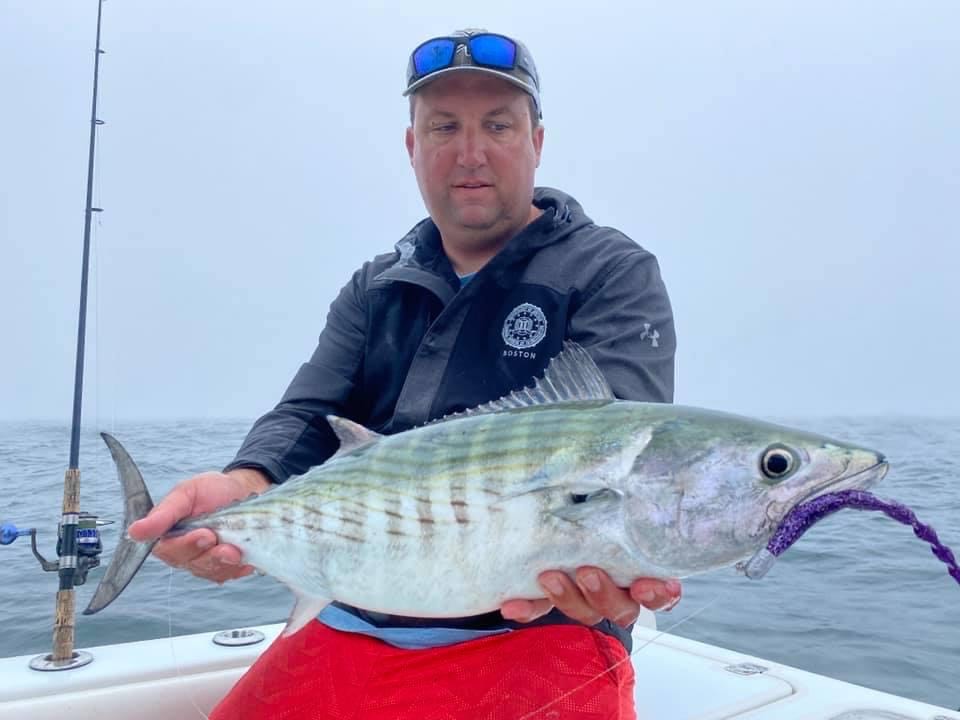
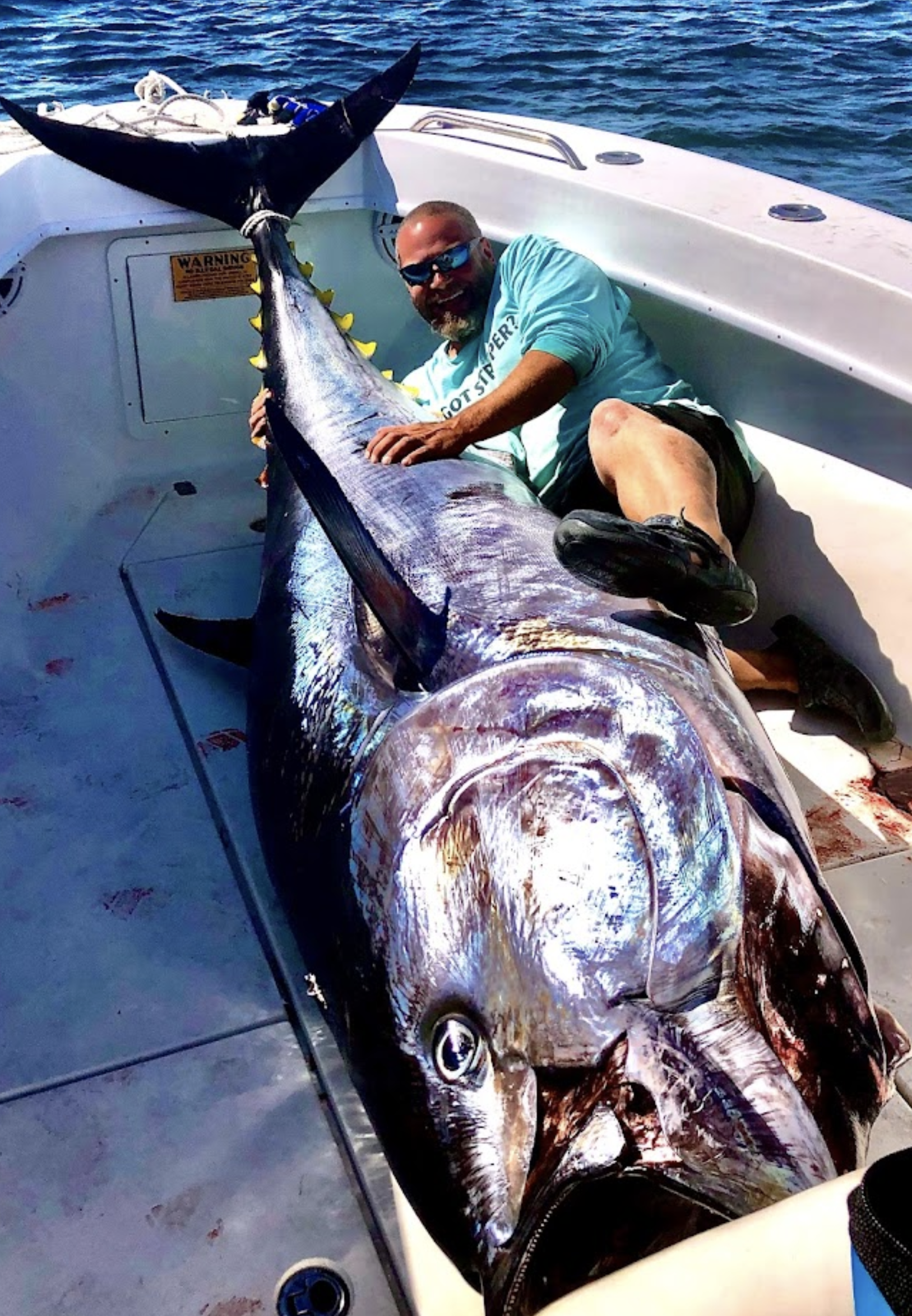





Jason LaMagna caught his first striper when he was 5 or 6 years old and got “hooked” (he said without a trace of irony) on fishing. His family moved to the Cape from New Jersey just before he started first grade. He tagged along with his father to angle “first from the beach, then from a boat, and then when I was about 8, 9, or 10, my father got a captain’s license and started a charter [fishing] service,” which the youngster often joined.
Working or not, father and son fished “from ponds, from jetties, from beaches, from creeks,” said LaMagna, who then lived in the “not fancy” part of Osterville and went through the Barnstable public school system. “One time when I was in [Barnstable] high school,” he said, “the fishing was so good that I skipped school for five days in a row.”
But apparently he kept his grades high enough to get into Johnson and Wales University in Rhode Island, where he earned a degree in culinary arts. That achievement led to a job in a restaurant.
“Then a supplier offered me a job on a lobster boat. I took it because I like being outside so much better” than working in a kitchen, he said. He took on some commercial fishing gigs and worked in marine construction. He also earned his captain’s license, “the best thing I ever did,” he said.
In the early 2000s, LaMagna got an irresistible offer. Alan Hastbacka was starting a fishing charter service called Got Stryper and asked him to join. The business now has three boats and plans to add a fourth. Their season, which begins in late April or early May, becomes “insane from mid-June to mid-September, meaning every day,” said LaMagna. It ends sometime in November, when “the striped bass [fishing] is epic.”
Which brings us to his favorite recipe. What does an impassioned fisherman with a culinary arts degree like to do with his own catch of the day?
“Ceviche,” he answered immediately. Which means, of course, no cooking at all, just the freshest fish (he likes striper) and some produce.
LaMagna cuts the fish into small chunks (“the smaller the better,” he advised), and marinates them in half lemon juice, half lime, with a dash of hot sauce (“not tabasco, which I like but it tastes weird in this recipe; chilula is really good”).
Then “throw [the mixture] in the fridge,” and while it marinates (thus curing the fish), chop up tomato, red onion, cilantro, watermelon, jalapeno, and cucumber, which is a must, he said, “then mix it together and have it with tortilla chips. The whole thing takes just half an hour if the [fish] chunks are really small.”
We jump from the kitchen recipe to the formula for success as a fishing guide.
“The key is communication,” LaMagna said. “I won’t take you tuna fishing if there’s no tuna,” for example, and “I won’t take people out in bad weather.” He added that he finds out what guests want out of their trip: “Some want just to catch and release [the fish]. But we will also clean the catch for you and send you home with a bag of fillets.”
Many of his fishing expeditions turn very personal, LaMagna said. “One little girl kissed her fish,” he recalled, “and people have gotten engaged, or scattered ashes. It’s a big responsibility,” he said of arranging his trips to suit his guests.
Sometimes people don’t even fish. “I love to take people to Monomoy Island,” he said, because sometimes they can see “hundreds of humpback whales” instead.
LaMagna seemed humbled yet amused and pleased by his accolade from FishingBooker. “They’re worldwide, a great, great, great company, sort of a Domino’s Pizza” in terms of how many people contact them to charter fishing trips. He said that the CEO of the company once came to Chatham to visit the operation, then gave among its highest rankings to GotStryper.com.
Who fishes on charters? “Well, it’s like coming to the Squire,” he said over a table at the local meeting spot. “There are families with kids, college kids, old friends, experienced people, ones who have never been on a boat before. There are people who have to learn about tides.” The business has just taken on a new captain, Ron Deaso, who was one of Alan Hastbacka’s first charter customers, who has retired from firefighting in the Bronx. “He’s a kid whisperer,” said LaMagna about Deaso, who has even hosted an autistic child. And lots of women fish.
And do all these species of customers, locals and visitors from as far away as Switzerland, do well?
“Yeah,” said LaMagna, “knock on wood and pray to the fish gods, yes. So I’m just lucky and have fun going to work.”